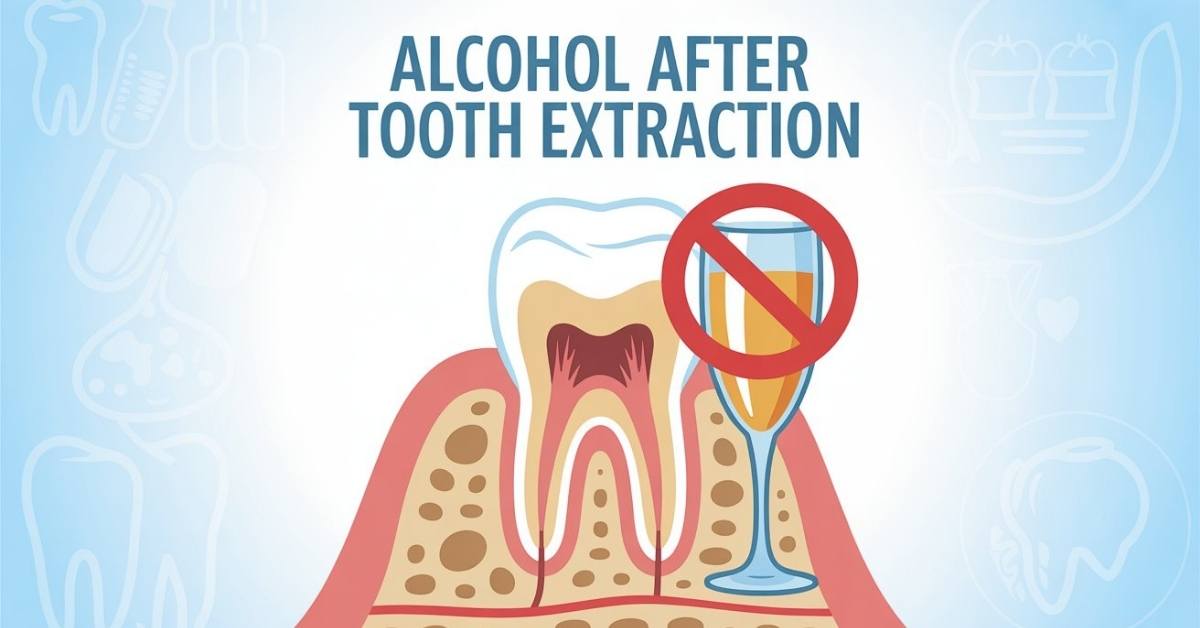
Alcohol after tooth extraction is one of the most searched questions after a tooth removal—because many people want to relax, attend an event, or simply enjoy a drink. But right after an extraction, your mouth is healing from an open wound. The wrong step at the wrong time can lead to pain, bleeding, or a problem like dry socket.
In this complete guide, you’ll learn when you can drink alcohol after tooth extraction, why dentists ask you to wait, what happens if you drink too early, and what to do if you already drank. Everything is written in simple, easy English, with clear timelines, helpful tables, and real-life examples.
Quick Answer: Can You Drink Alcohol After Tooth Extraction?
Let’s start with the question most people type into Google:
Can you drink alcohol after tooth extraction?
Not right away. In most cases, you should avoid alcohol for at least 48–72 hours, and often longer depending on:
- how difficult the extraction was
- if you have stitches
- if it was wisdom tooth extraction
- if you’re using antibiotics or painkillers
- if you are bleeding, swelling, or in strong pain
Many dentists recommend waiting 7–10 days for the safest recovery—especially after surgical extraction.
Quick rule: If your extraction site is still tender, bleeding, or your socket looks open, do not drink alcohol yet.
Why Can’t You Drink Alcohol After Tooth Extraction?
A tooth extraction leaves a small hole in your gum called the extraction site. Your body immediately starts healing by forming a blood clot over the socket.
This clot is not “gross” or “optional.” It is protective healing tissue.
If something damages or dislodges this clot, you can develop dry socket, which can be very painful and slow recovery.
So, why can’t you drink alcohol after tooth extraction? Here are the real reasons:
1) Alcohol can increase bleeding
Alcohol can make bleeding more likely because:
- it can affect blood flow
- it can irritate the wound
- it can make your mouth feel dry
Even small bleeding can restart if the clot is not stable.
2) Alcohol can slow down healing
Your body needs:
- hydration
- nutrients
- healthy blood supply
- tissue regeneration
Alcohol makes it harder for your body to do this. It may delay gum tissue healing and slow wound healing.
3) Alcohol can raise dry socket risk
Dry socket happens when the blood clot is lost or breaks down. This can expose bone and nerves, leading to:
- sharp, throbbing pain
- bad taste or smell
- pain spreading to the ear or jaw
4) Alcohol can cause dehydration
Alcohol may cause:
- dehydration
- dry mouth
- thicker saliva
A moist mouth heals better. A dry mouth heals slower.
Bottom line: Alcohol can disturb the “healing environment” your body is trying to build.
How Long to Wait to Drink Alcohol After Tooth Extraction? (Simple Timeline)
The question isn’t only “yes or no.” It’s also:
How long to wait to drink alcohol after tooth extraction?
Below is a clear timeline that works for most people.
Tooth extraction + alcohol waiting timeline
| Time after extraction | Can I drink alcohol? | Why? |
|---|---|---|
| First 24 hours | No | Clot is fresh, bleeding risk is high |
| 24–48 hours | No | High dry socket risk window |
| 48–72 hours | Usually no | Clot still stabilizing, wound still open |
| Days 4–7 | Maybe (only if healing well & no meds) | Depends on extraction type + symptoms |
| 7–10 days | Often yes | Most people are safer at this stage |
Important: This is general guidance. Your dentist’s instructions come first.
When Can You Drink Alcohol After Tooth Extraction? (Based on Your Situation)
Many people ask the same question in different ways:
- when can you drink alcohol after tooth extraction
- when can i drink alcohol after tooth extraction
- can i drink alcohol after tooth extraction
- can you drink alcohol after tooth extraction
The best answer depends on the type of extraction and your recovery.
If it was a simple extraction
A simple extraction means:
- the tooth came out easily
- no cutting the gum
- no drilling
- minimal trauma
If you’re healing smoothly, some people can safely return to alcohol after 72 hours.
Still, waiting 5–7 days is a safer option.
If it was a surgical extraction
Surgical extraction usually means:
- gum was opened
- tooth was broken into pieces
- more swelling
- higher infection risk
- longer healing time
In this case, alcohol should be avoided for at least 7–10 days.
If you had wisdom tooth removal
Wisdom teeth often require surgical extraction. The area can be deeper, and dry socket is more common.
A safe guideline:
- minimum: 72 hours
- better: 7 days
- safest: 10 days
If you have stitches
Stitches (sutures) indicate deeper healing. Alcohol can irritate tissue and slow closure.
Wait until:
- swelling reduces
- stitches dissolve or are removed
- you can eat normally without pain
Often 7–10 days is best.
Drinking Alcohol After Tooth Extraction: What Can Go Wrong?
This is where most people want the honest truth.
Drinking alcohol after tooth extraction can cause problems—sometimes immediately, sometimes after a day.
Here are the main complications.
Dry socket (simple explanation)
The Dry socket means:
- the clot is missing or damaged
- bone becomes exposed
- healing becomes painful and slow
Dry socket often starts 1–3 days after extraction.
Common symptoms:
- Severe pain that gets worse
- Pain traveling to jaw, ear, or head
- Bad breath or bad taste
- Socket looks empty or white
If your pain suddenly gets worse after feeling better, dry socket is a possibility.
Bleeding again after drinking
Sometimes people drink and notice:
- pink saliva
- bleeding when they spit
- bleeding on pillow at night
This can happen if alcohol irritates the socket or weakens the clot.
Delayed healing
Alcohol can slow:
- clot stability
- granulation tissue growth
- closure of the socket
You may notice:
- longer soreness
- longer swelling
- wound looks open for longer
Infection risk
Alcohol doesn’t directly “cause infection,” but it can increase your chance by:
- delaying healing
- irritating gum tissue
- lowering your body’s ability to recover
Signs of infection:
- fever
- pus
- worsening swelling
- strong smell
- pain that does not improve
READ MORE >>> Soft Food Recipes: 50 Easy, Healthy & Comforting Meal Ideas
I Drank Alcohol After Tooth Extraction — What Should I Do?
This is an extremely common situation.
Many people search:
- i drank alcohol after tooth extraction reddit
- “I drank alcohol on day 2 after extraction”
- “Has anyone drink alcohol after tooth extraction?”
First: don’t panic. One mistake doesn’t always cause dry socket.
But you should act smart right away.
Step-by-step: what to do now
If you already drank alcohol:
- Stop drinking immediately
- Sip water (hydration helps your body)
- Avoid smoking or vaping
- Avoid vigorous rinsing or spitting
- Eat soft foods only
- Watch symptoms for 24–48 hours
If you drank within 24 hours
This is the highest-risk timing.
Do:
- keep the area calm
- rest
- drink lots of water
- avoid hot foods
Don’t:
- rinse hard
- use straw
- touch socket
If you drank on day 2 or day 3
Risk is still real.
Watch for:
- increasing pain
- bad taste/smell
- strong throbbing pain
The If you feel normal after 24–48 hours, you may be okay.
If you drank after 1 week
If the socket is healing well and pain is minimal, the risk is much lower.
Still:
- avoid heavy drinking
- avoid very hot/spicy foods with alcohol
- keep hydration strong
When to call your dentist
Call a dentist if you have:
- pain that becomes sharp and intense
- pain that spreads to ear/jaw
- bleeding that doesn’t stop
- swelling that worsens after day 3
- fever or pus
Alcohol + Medications After Extraction (Very Important)
This is a topic many people ignore—and it’s dangerous.
Even if your socket is healing, alcohol can be risky with meds.
Alcohol and antibiotics after tooth extraction
If you are taking antibiotics:
- avoid alcohol
- finish your course
- ask your dentist if unsure
Some antibiotics can cause strong reactions when mixed with alcohol.
Alcohol and painkillers after tooth extraction
Painkillers may include:
- ibuprofen
- paracetamol
- stronger prescription pain meds
Alcohol + pain meds can increase:
- nausea
- dizziness
- stomach irritation
- sleepiness
Safe advice: Don’t mix alcohol and painkillers.
If you had sedation anesthesia
If you had sedation:
- your body may take time to clear it
- alcohol can make you dizzy or unsafe
Wait at least 24–48 hours, or follow your dentist’s instructions.
Types of Alcohol: Does It Matter?
Yes, it can.
Some drinks irritate more than others.
Beer after tooth extraction
Beer can cause:
- mouth dryness
- mild irritation
- higher chance of dehydration
Wine after tooth extraction
Wine is acidic and may sting the wound.
Hard liquor (vodka/whiskey)
Hard alcohol is stronger and can:
- irritate tissue
- increase dehydration
- worsen bleeding risk
Mixed drinks and soda
Soda + alcohol often includes:
- sugar
- acidity
- carbonation
This can irritate the healing extraction site.
If you must drink later: choose low-acid, small amount, and drink plenty of water.
Reddit & Real Experiences: “Has Anyone Drink Alcohol After Tooth Extraction?”
Many people type:
- has anyone drink alcohol after tooth extraction
- i drank alcohol after tooth extraction reddit
Why? Because they want real-life stories.
What people usually report
Common themes:
- some drank after 2–3 days and felt fine
- others got pain and panic symptoms
- heavy drinking increased issues
- drinking while on antibiotics caused nausea
What to trust vs ignore online
Reddit stories can be helpful, but:
- every mouth heals differently
- extraction types are different
- medical history matters
- some people ignore symptoms until worse
Smart rule: Use online stories for comfort, but follow dental safety.
What You CAN Drink Instead (Safer Options)
While healing, choose drinks that support recovery:
Best drinks for healing
A simple list:
- Water
- Milk
- Lukewarm tea (not too hot)
- Smoothies (no straw)
- Oral rehydration drinks
Drinks to avoid
Avoid these early:
- alcohol
- hot coffee
- acidic citrus juices
- carbonated sodas
- very spicy soups
What to Eat If You’re Craving a Drink (Soft Food Recovery Support)
Food can reduce cravings and help healing.
Days 1–2: Best soft foods
- yogurt
- mashed potatoes
- eggs
- oatmeal
- soups (not hot)
Days 3–7: Stronger soft foods
- rice (soft)
- pasta
- shredded chicken
- soft bread soaked in soup
Avoid foods that reopen the wound
- chips
- nuts
- seeds
- spicy hard snacks
Do’s and Don’ts After Tooth Extraction (Recovery Rules)
These rules protect the blood clot and speed healing.
Do’s
- bite on gauze if bleeding
- rest for 24 hours
- use cold compress for swelling
- brush gently (avoid socket)
- drink lots of water
Don’ts
- no alcohol
- no smoking/tobacco
- no straw
- no forceful spitting
- no hard chewing on extraction side
Important: The first 72 hours matter the most.
Mini Case Studies (Realistic Examples)
Case Study 1: “Wedding event on day 2”
A person had a simple extraction and attended a wedding on day 2. They drank 2 glasses of wine. That night they felt mild bleeding and soreness. They stopped, hydrated, ate soft food, and symptoms improved within 24 hours.
Lesson: Small drinking can still trigger problems early.
Case Study 2: “Wisdom tooth + heavy drinking”
Another person had wisdom tooth removal and drank heavily on day 3. Pain started on day 4, became severe, and was diagnosed as dry socket.
Lesson: Higher-risk extraction + alcohol = bigger danger.
FAQs
Can I drink alcohol after tooth extraction?
It’s best to avoid alcohol for at least 48–72 hours, and often up to 7–10 days, depending on your healing.
When can you drink alcohol after tooth extraction?
Most people can safely drink after 7 days, but some recover faster. Always follow your dentist’s instructions.
When can I drink alcohol after tooth extraction?
If you’re pain-free, no longer bleeding, and not taking medication, you may be able to drink after 3–7 days, but safer is 7–10 days.
How long to wait to drink alcohol after tooth extraction?
A safe waiting timeline is 72 hours minimum, and 7–10 days for best safety.
Why can’t you drink alcohol after tooth extraction?
Because alcohol can increase bleeding, slow healing, cause dehydration, and raise the risk of dry socket.
What happens if I accidentally drank alcohol after extraction?
Stop drinking, hydrate, avoid smoking and straws, and monitor symptoms for 24–48 hours. Call your dentist if pain worsens.
Conclusion: The Safest Time to Drink Alcohol After Tooth Extraction
Alcohol after tooth extraction should be avoided early because your mouth needs time to form a strong blood clot, grow healthy tissue, and prevent complications like dry socket.
If you want the safest answer:
- avoid alcohol for at least 72 hours
- ideally wait 7–10 days, especially after surgical extraction or wisdom tooth removal
- do not drink alcohol if you’re taking antibiotics or painkillers
Healing first, alcohol later—your recovery will be faster, smoother, and much less painful.